
At a glance
- List the components before sizing the outer box.
- Check the complete packed set, including removal clearance and the carrier bag.
- Confirm quantities and order conditions separately for every component.
Decide what belongs in the set
An eyewear packaging set may include a case or pouch, a cleaning cloth, a bottle, a paper box and a carrier bag. Start with what the customer should receive. Separate essential items from optional additions before choosing the outer packaging.
A reference photograph can communicate the look you want, but it is not a complete specification. Identify the components you want to keep, those you want to change and any items you will supply yourself.
| Component | Information to confirm | Sample check |
|---|---|---|
| Case or soft pouch | Model, material and logo | Frame fit, opening and finished packed size. |
| Cleaning cloth or fabric pouch | Fabric, size, edge or opening and artwork | Folded or packed format and position in the set. |
| Bottle | Empty or filled request, capacity, closure and labeling | Complete bottle, including closure and individual packing. |
| Paper box | Contents, arrangement, opening and artwork | Usable space, supports and ease of removing the contents. |
| Carrier bag | Packed contents, material, handles and artwork | Fit with the complete box or set and practical handle clearance. |
State whether a bottle request is for empty packaging or a filled cleaning product. A bottle image alone does not define its contents or the requirements for supplying them.
Size the box around the contents
Check the selected case and accessories before confirming the box dimensions. Include any sleeve, individual packing, insert or internal support that will be part of the finished set.
Arrange the components as they will be supplied. Check that they can be inserted and removed easily, and that they do not move or press against one another in a way that affects the presentation. An attractive layout on screen does not confirm the usable space inside a box.
Compare foldable cases, soft eyeglass cases and paper packaging boxes as starting options. A box associated with one model should not be assumed to fit another case or a larger set.
Have a model or reference in mind?
Review your project with our team
Check the carrier bag last
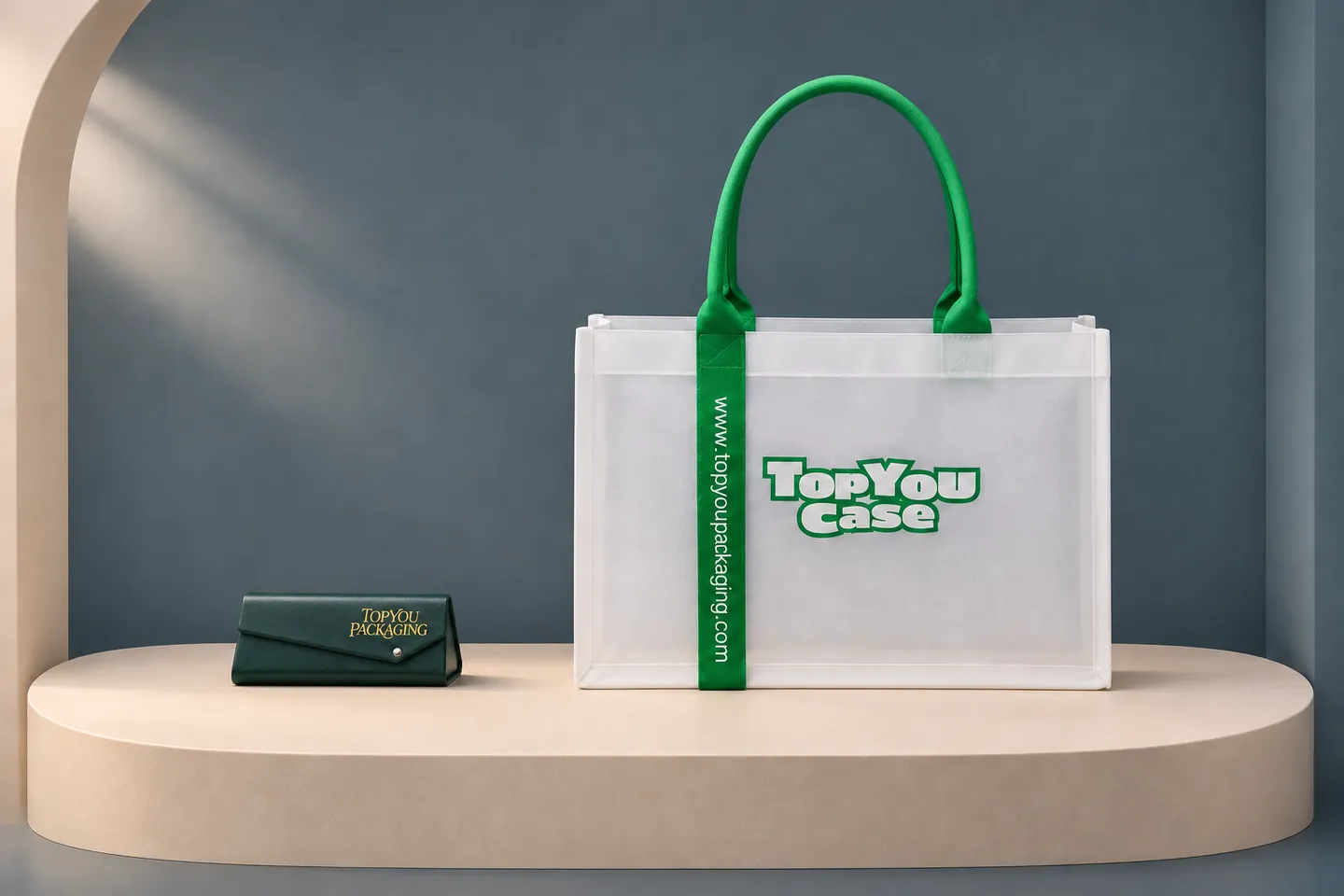
Choose the bag around the complete packed contents. Check its usable width, height, base and handle clearance with the finished box or set, rather than sizing it from an unpacked case.
Consider how the set will be handed to the customer and how they will remove it. Review paper and canvas bag formats with the intended contents; materials, handles and artwork need to suit the selected bag.
Coordinate artwork across the components
The case, cloth, box and bag can share a color palette and consistent logo placement without using identical materials. Review the samples together because paper, textiles, coverings and foil can reproduce color differently.
Specify the logo size and position for each component. The same artwork dimensions may not work equally well on a case, a cloth and a box. Provide editable files where available, with a clear revision reference for each design.
Physical material cards, Pantone references, foil cards and customer-supplied samples can support the review. Basic printed logos are free; special processes are quoted for the model and order.
Plan quantities and timing by component
Specify the number of complete sets and the quantity required for each item, including spares or separately supplied pieces. Cases, cloths, bottles, boxes and bags can have different order conditions. A low-MOQ case does not establish the MOQ for the whole set.
Give the delivery country and target arrival date early. Sampling, bulk production and transit are separate stages. Typical bulk production is 45–60 days after confirmation; the quotation confirms the schedule for the selected combination.
Approve appearance and fit together
Review the complete sample set before production. Check the materials, artwork, component versions, arrangement and ease of opening. If a case size or material changes, review its effect on the box, supports and bag as well.
To request a quotation, send your component list, preferred models, artwork, material direction, quantities, delivery country and target timing. If you are still deciding, explain how the set will be used. Our set packaging and development process pages can help you prepare the brief.