
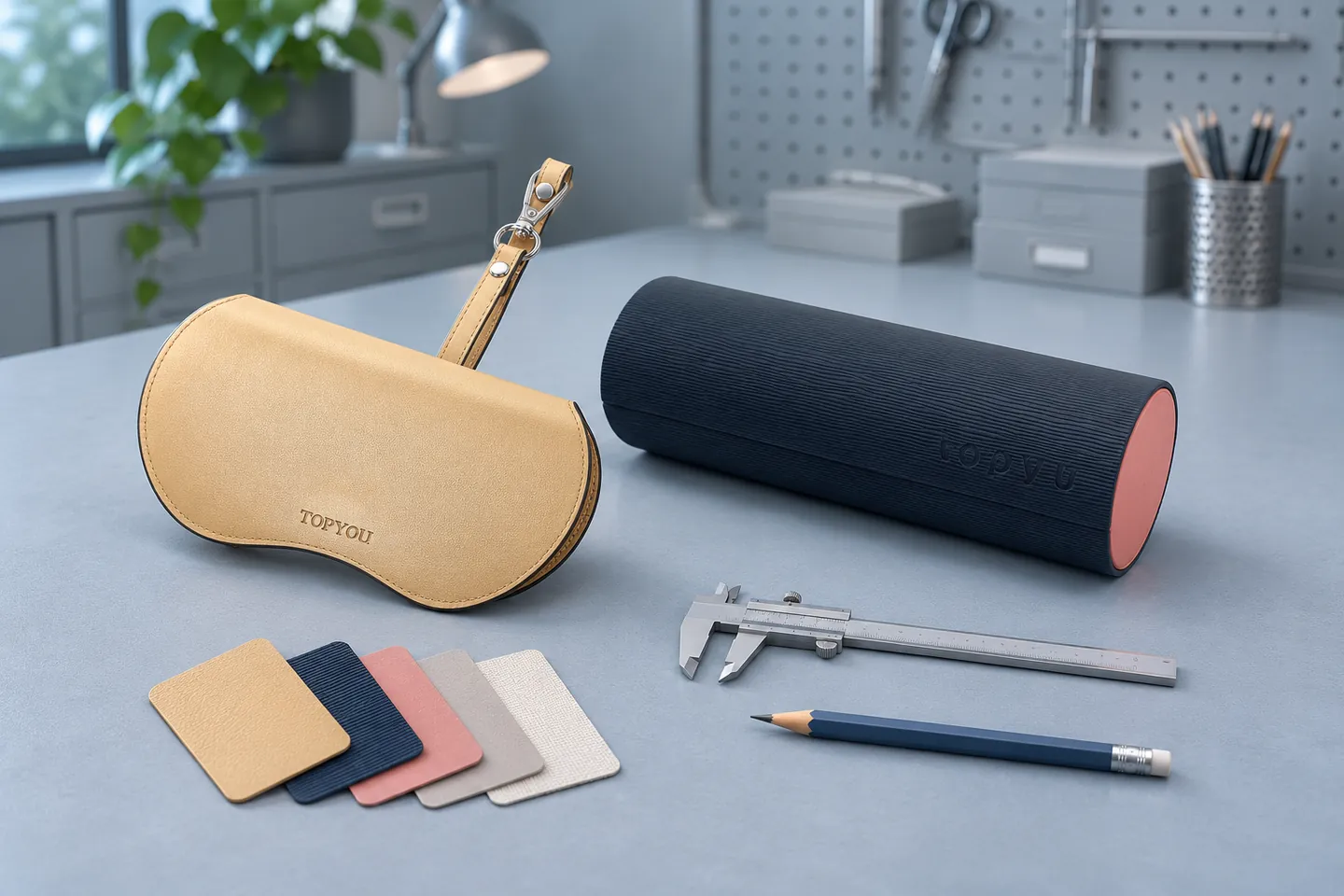
Project overview
Custom eyeglass cases and coordinated packaging develop from a clear brief: the product, intended eyewear, quantities, artwork and destination. Existing model selection and new-structure development follow the requirements of the actual project.
Step 1 — Share the Project Requirements
Tell us who the packaging is for, what it must hold and how it will be sold or distributed. Include the product family or public model, quantity by version, target market, destination, frame dimensions, branding, matching components and required timing.
Your input: project brief, references and available artwork.
Our output: clarification questions and an initial route for selection or development.
Decision: whether to adapt an existing model or assess a new construction.
Step 2 — Review Product and Structure Options
We review the intended use, fit, appearance, quantity and production requirements. For an existing model, this means confirming supported changes and usable internal space. For a new structure, the team assesses geometry, materials, closures, tooling and prototype requirements.
A reference photo can guide appearance, but it does not establish dimensions, fit or manufacturing details.
Decision: selected model, shortlist or agreed development direction.
Step 3 — Confirm the Quotation Scope
A useful quotation should make clear what is included and what still requires confirmation. The scope may cover product construction, material direction, logo process, quantity by model or color, sample requirements, tooling or setup, packing, delivery terms and requested documentation.
Minimum quantities, sample costs and timing are confirmed for the selected specification. They should not be assumed to apply across every product family.
Decision: commercial scope approved for the next stage.
Step 4 — Prepare Artwork and Technical References
Provide editable logo artwork, color references, intended placement and applicable brand rules. For fit-sensitive cases, provide frame dimensions, photographs and representative physical samples where possible.
Digital previews can support review of proportion, placement and color direction. They do not replace a physical sample when material feel, fit, closure, embossing depth or exact finish matters.
Decision: artwork and reference package ready for sampling.
Step 5 — Produce and Review Samples
The sample should be identified by model or revision, material, finish and date. Review it against the agreed brief rather than against memory or an isolated photograph.
Depending on the product, check:
- Frame fit and contact areas
- Dimensions and closure behavior
- Exterior and lining materials
- Color, texture and workmanship
- Logo size, position and definition
- Matching accessories and outer packaging
- Packing orientation and protective components
Record requested changes clearly and issue a new revision when necessary.
Decision: approve, revise or resample.
Step 6 — Approve the Final Specification
Before production, confirm the model or construction, dimensions, materials, colors, lining, closure, artwork revision, logo placement, packing method, quantity by version and applicable inspection criteria.
The approved sample and written specification should be connected. If a drawing, photograph and sample conflict, the governing reference must be identified.
Decision: written authorization to begin production.
Step 7 — Production and In-Process Checks
Production follows the approved specification. Applicable checks may cover incoming materials, first-article confirmation, dimensions, appearance, assembly, function, logo application and packing.
If a material, component or process substitution is proposed, it should be disclosed and approved before the affected production continues.
Output: production status and recorded quality checks appropriate to the project.
Step 8 — Packing, Final Review and Delivery
Before shipment, confirm quantity, version, labels, individual protection, carton packing and delivery documentation. Inspection scope and reporting should be agreed according to the product and buyer requirements.
Shipping terms, destination details and any buyer-appointed inspection should be confirmed in time to avoid preventable delays.
Output: approved shipment arrangement and relevant documents.
Changes After Approval
Changing the material, dimensions, logo, color, lining, quantity split or packing after approval can affect cost, timing, tooling and quality. Submit changes in writing. The team will identify what must be requoted, resampled or reapproved before implementation.
Frequently Asked Questions
How does a custom eyewear packaging project start?
It starts with a brief covering the product, intended use, frame dimensions, quantity, destination, branding and timing. This information helps determine whether an existing model or new development route is appropriate.
What is needed before an eyeglass case sample is made?
Confirm the selected structure or reference, dimensions, material direction, colors, logo artwork and placement, quantity and the details the sample is expected to demonstrate.
What should a buyer check when approving a sample?
Check fit, closure, dimensions, materials, appearance, lining, logo, workmanship, accessories and packing against the written brief. Record the approved revision and any permitted variation.
Can details be changed after sample approval?
Yes, but the change must be reviewed for technical, commercial and scheduling impact. Affected characteristics may need a revised quotation, new sample or updated approval.
What must be approved before mass production?
Approve the structure, dimensions, materials, colors, lining, logo artwork and placement, packing method, quantity by version and the physical sample or specification that production will follow.
Build the Brief Before Building the Product
Share the key project information and available references. We will help identify the decisions required for a useful quotation and sample.